




Therapeutic Fasting and Parkinson’s Disease: What Emerging Research Reveals
Can therapeutic fasting help people living with Parkinson’s disease? A new ARTE documentary explores this question through a patient’s personal experience, while emerging scientific research offers encouraging insights into the potential role of fasting in managing symptoms.
A personal experience featured on ARTE
In the ARTE documentary Les bienfaits du jeûne thérapeutique, Martine Willot shares her experience of living with Parkinson’s disease and the role therapeutic fasting has played in her life.
Having incorporated regular fasting into her routine, including periods of medically supervised fasting at Buchinger Wilhelmi, Martine describes the positive changes she has experienced in managing her symptoms.
Her story raises an important question: could therapeutic fasting offer additional support for people living with Parkinson’s disease?
While individual experiences cannot establish clinical effectiveness, recent research provides encouraging reasons to explore this possibility further.

What does the latest research tell us?
A recent pilot study involving researchers from the University of Luxembourg, Charité Berlin and other European institutions investigated the effects of prolonged fasting followed by time-restricted eating in 31 patients with Parkinson’s disease.
Participants completed a seven-day fasting period, consuming no more than 350 calories per day, followed by 12 months of time-restricted eating, with meals consumed within an eight-hour daily window.
The preliminary findings were encouraging.
Researchers observed improvements in motor symptoms, including movement difficulties, stiffness and tremors, as well as reductions in certain non-motor symptoms. Improvements in measures of anxiety and depression were also reported.
Notably, improvements in several clinical assessments were still observed at the 12-month follow-up.
However, these findings require careful interpretation. The study was relatively small, did not include a non-fasting control group and combined prolonged fasting with subsequent dietary changes. It is therefore not yet possible to determine how much of the observed improvement can be attributed to fasting itself.
Further controlled clinical trials are needed to confirm these results and establish which patients might benefit most.
The Buchinger Wilhelmi approach: Individual care comes first
At Buchinger Wilhelmi, therapeutic fasting is guided by more than 100 years of clinical experience and continuously informed by scientific research.
Our approach is rooted in a fundamental principle: every patient is different, and every therapeutic intervention must be adapted to their individual needs.
For selected patients with early-stage Parkinson’s disease, medically supervised fasting may be considered following a comprehensive medical assessment.
However, fasting is not suitable for everyone.
As Parkinson’s disease progresses, some patients may experience unintended weight loss, nutritional deficiencies or a decline in muscle mass and strength. In these circumstances, prolonged fasting may present additional risks.
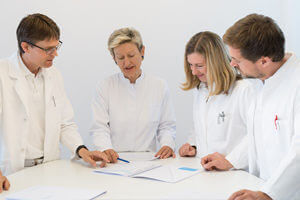
Our medical team therefore carefully evaluates each patient’s overall health, nutritional status, physical condition, medication and stage of disease before considering whether fasting could be appropriate.
When fasting is not advisable, individualised nutritional strategies may offer an alternative approach to supporting health and wellbeing.
The priority is always to protect the patient’s health while exploring the most appropriate therapeutic options.
Looking ahead: An encouraging direction for research
The growing scientific interest in fasting and neurological health opens new possibilities for understanding the relationship between metabolism, nutrition and chronic disease.
For Parkinson’s disease, the available evidence remains preliminary. Therapeutic fasting has not been established as a treatment that slows or reverses disease progression, and it must never replace conventional medical care.
Nevertheless, early clinical findings, together with carefully documented patient experiences, provide valuable reasons to continue investigating its potential as a complementary approach.
At Buchinger Wilhelmi, we believe that progress in medicine comes from combining scientific curiosity with clinical experience and individualised care.
Our commitment is to follow emerging research while ensuring that every therapeutic decision remains guided by the needs and wellbeing of the individual.
Discover more about therapeutic fasting and our medical approach at Buchinger Wilhelmi.
Scientific reference: Hansen B. et al., Prolonged Fasting Followed by Time-Restricted Eating Improves Motor and Non-Motor Symptoms in Parkinson’s Disease. Preprint, DOI: 10.2139/ssrn.5930561.
Documentary: ARTE, Re: Mit Fasten gegen chronische Krankheiten. Watch the documentary.