
Article Schweizer Illustrierte, issue 26/2022, Text: Silvia Binggeli, Photos: Mirjam Kluka

No quick fixes
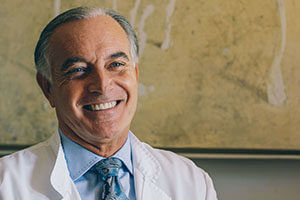
Françoise Wilhelmi de Toledo is a fasting physician of international renown. The Geneva born doctor has now handed over her clinic on Lake Constance to her two sons. A conversation about will, reflection and frozen pizza.
GRUEN: Françoise Wilhelmi de Toledo, how did you come to fasting?
As a young woman, I had health problems. I began to take an interest in nutrition. At that time, knowledge about the connection between health and nutrition was still limited. Fasting was not yet a topic in medicine.
You studied medicine in your hometown of Geneva, which was not a given for a young woman in the 1970s.
I come from a family of pharmacists. My father was a remarkable man with great foresight. He believed his daughters should study. At the same time, he thought he knew what was best for me and assumed I would take over the family business. But I wanted to study medicine. I first had to make that clear to him.
During your studies, did you find like-minded people interested in nutrition?
None of the professors could tell me anything about the philosophy of fasting. Later, during my internships, I shared my knowledge about nutrition. But the professors held me back. They said, leave my patients alone. Food is the last pleasure they have.

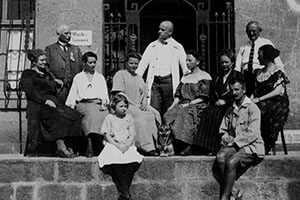
You married Raimund Wilhelmi and came to the internationally renowned fasting clinic in Überlingen. The clinic was founded by your husband’s grandfather, Otto Buchinger. What connects you to this pioneer, who began practising therapeutic fasting as a physician as early as 1920?
Like me, he experienced the effects of therapeutic fasting in his own body. He suffered from severe rheumatism at a time when there was no treatment. Through fasting, he became symptom free within three weeks. Everything he created afterwards was guided by this conviction.
What is fasting essentially about?
It is about the removal of cellular waste, regeneration of cells and the reduction of inflammation. Above all, fasting gives you time. You turn inward and ask yourself what truly supports your potential and what is merely routine that may in fact harm you.
Where are the limits?
Fasting has become popular. Large companies can no longer ignore the subject. Yet they often isolate a single aspect, develop a product and promise a great deal. There may be short term results, but the person does not truly change.
What does that mean in practice?
We should not become dependent on products. Instead, we should rediscover our own self-healing capacities. Fasting, movement, sleep, nutrition and emotional balance are the five pillars that support quality of life. Tools and products can only complement this. The genetic programme of fasting is present in every human being and in every animal. Otherwise, how would we survive the night without eating? And how would we have survived before food could be stored, when nourishment could only be kept in the body as fat?
In 2019, you and your husband handed over the clinic to your sons Leonard and Victor. Victor, did you feel pressure to follow in your parents’ footsteps?
Victor Wilhelmi: There was never any pressure. The generation before us experienced much more pressure and did not want to pass that on.
Leonard Wilhelmi: At some point our parents said, we need to talk about succession. But you are completely free to take this path or not.
How did that process unfold?
Françoise Wilhelmi de Toledo: In my late fifties, I decided to complete a master’s degree in family business. We applied this approach together. We put everything on the table, including unresolved past matters and financial figures. We discussed roles, responsibilities and expectations.
Leonard Wilhelmi: We developed a shared language and a way of speaking that allows us to discuss things without being driven by emotion. We got to know each other on a new level.
Victor Wilhelmi: Developing a strategy is like fasting. You should not wait until illness is already present.
To be honest, Leonard and Victor, were you always enthusiastic about your parents’ passion?
Victor Wilhelmi: Well, I remember one time when our mother came home after a weekend in which we had been alone. She found the box of a frozen pizza in the bin. She looked at us as if we had understood absolutely nothing over the past fifteen years (laughs).
Françoise Wilhelmi de Toledo: But afterwards, I set up an open account for them at a nearby Italian shop. They had to go a certain distance to get fresh food there, but they were free to choose whatever they liked.
Leonard Wilhelmi: We defined a shared vocabulary and a way of communicating that allows us to discuss things without emotion. We got to know each other on a different level.

In front of their internationally renowned fasting clinic in Überlingen, with founder Otto Buchinger as a statue in the background: Françoise Wilhelmi de Toledo with her sons Leonard and Victor.
Victor Wilhelmi: Developing a strategy is like fasting. You should not wait until illness is already present.
What does fasting mean to you today?
Leonard Wilhelmi: At home, we always had many interesting guests from the clinic. Artists, authors, politicians, entrepreneurs. In conversation, it did not matter who they were. What mattered was that they had all had a positive experience. In simple terms, their eyes were shining.
Victor Wilhelmi: Fasting brings you into a state where everything is shaken up. Afterwards, you feel better. Many describe it as a kind of garage or check, a reset.
“You are shaken up once. Afterwards, you feel better. It is like a place where you are serviced and renewed.”
—
Why has fasting become a trend?
Victor Wilhelmi: The pandemic disrupted our daily routines. It made many people reflect on where the world is heading and what direction they want to take personally. People tell us every day that they want to change something. Often they do not yet know what. After a few days, clarity emerges. Many people change their professional situation, process separations or reassess relationships after fasting.
How have the expectations of your guests changed?
Leonard Wilhelmi: When we took over in 2019, we thought we would change everything and make it better. Then the pandemic came and everything stopped. A few guests remained with us during lockdown. We could only offer a very reduced programme and feared they would not be satisfied. The opposite was true. That is when we realised that it is not only about room categories or the view of the lake. It is about the opportunity to have a deeply personal fasting experience.
Victor Wilhelmi: At first, many asked whether we wanted to attract a younger audience. Regardless of age, we want guests who are willing to engage with the experience and take the time for it. Those driven by pressure to optimise themselves, looking for a quick solution or the greatest possible weight loss, will not find what they are looking for here.
FASTING BY THE LAKE
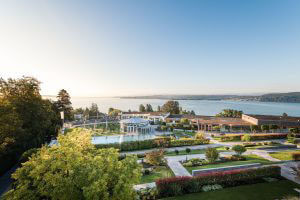
Dr Otto Buchinger received his first fasting patients as early as 1920. In 1953, he opened his clinic in Überlingen on Lake Constance together with his daughter and son in law. The family business, which now also includes a clinic in Marbella, is led in the fourth generation by Leonard and Victor Wilhelmi and their cousin Katharina Rohrer Zaiser.
Leonard studied economics at the University of St Gallen, Victor at the École hôtelière de Lausanne. From their mother, Dr Françoise Wilhelmi de Toledo, they inherit not only internationally recognised research expertise in fasting but also her French mother tongue.
Text: Silvia Binggeli / Fotos: Mirjam Kluka
Buchinger Wilhelmi
Buchinger Wilhelmi is one of the world’s leading clinics for therapeutic fasting, integrative medicine and inspiration. Our Buchinger Wilhelmi AMPLIUS® programme is based on more than 100 years of experience and is continuously developed in partnership with university research centres. Therapeutic fasting is the central element of our holistic concept, dedicated to your health.
Would you like to learn more about our fasting programmes? We look forward to hearing from you.